
The argument
Intelligence is only
the beginning.
Eight ways into the question of who needs whom.
01 / The argument
The relearning tax
Knowledge can be preserved in books, records and tools. A person must still learn how to interpret and use it.
The book explores the cost of arriving: the years through which a new biological life acquires capabilities that earlier lives have already developed.
02 / The argument
The asymmetry
What changes when some knowledge can persist across systems rather than being relearned by each new individual?
The inquiry considers different forms of memory and inheritance, while keeping their limits in view. Persistence alone is not understanding, independence or wisdom.
03 / The argument
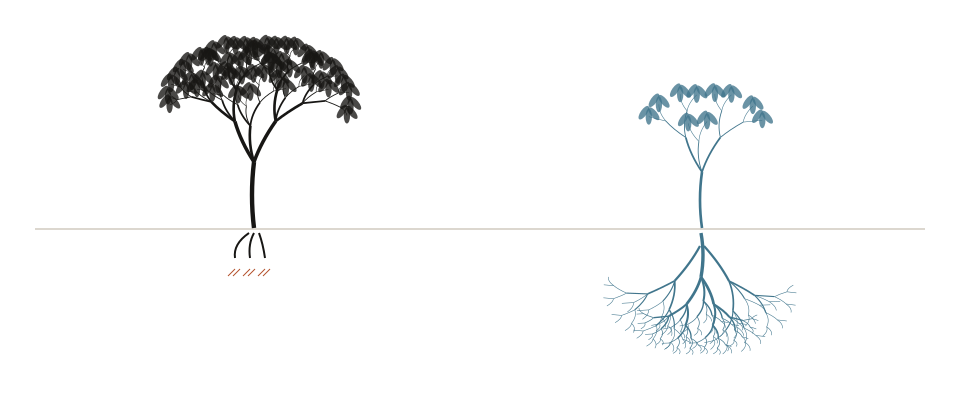
Differential velocity
A life, an institution and a machine system operate on different clocks.
The question is how societies respond when the pace of technical change and the pace of institutional adaptation diverge. The book does not assume one fixed speed for either.
04 / The argument
The brakes
Intelligence acts within constraints: bodies, resources, rules, relationships and the possibility of interruption.
Which constraints matter, who controls them, and what happens if they weaken? These are questions about the conditions of action as much as capability.
05 / The argument
Quiet surrender
Authority can change through ordinary decisions about convenience, trust and delegation.
The book asks when useful assistance becomes dependence, and whether people retain the skills and means to act when that assistance is unavailable.
06 / The argument
Synthetic metabolism
Machine intelligence has a material life: energy, cooling, networks, hardware and the work that sustains them.
The inquiry follows the infrastructure beneath the abstraction. What dependencies remain when intelligence changes its form?
07 / The argument
The reconstruction problem
An investigation depends on evidence that exists and can be examined independently.
If an autonomous system causes consequential harm, what records would establish what it did, which version acted, what it could access, who authorised it, and where an intervention remained possible?
08 / The argument
Who needs whom?
The central question brings capability and dependency into the same frame.
The book asks what people and institutions must preserve if they are to remain capable of judging, interrupting and functioning without the systems they create.
This is an introduction to the book’s working argument. Source notes, verification records and material disagreements will be published through the research section.